Method
Why, when I can, I start from real footage
In videos made with artificial intelligence the camera still matters. Here is what changes when the starting point is real footage.
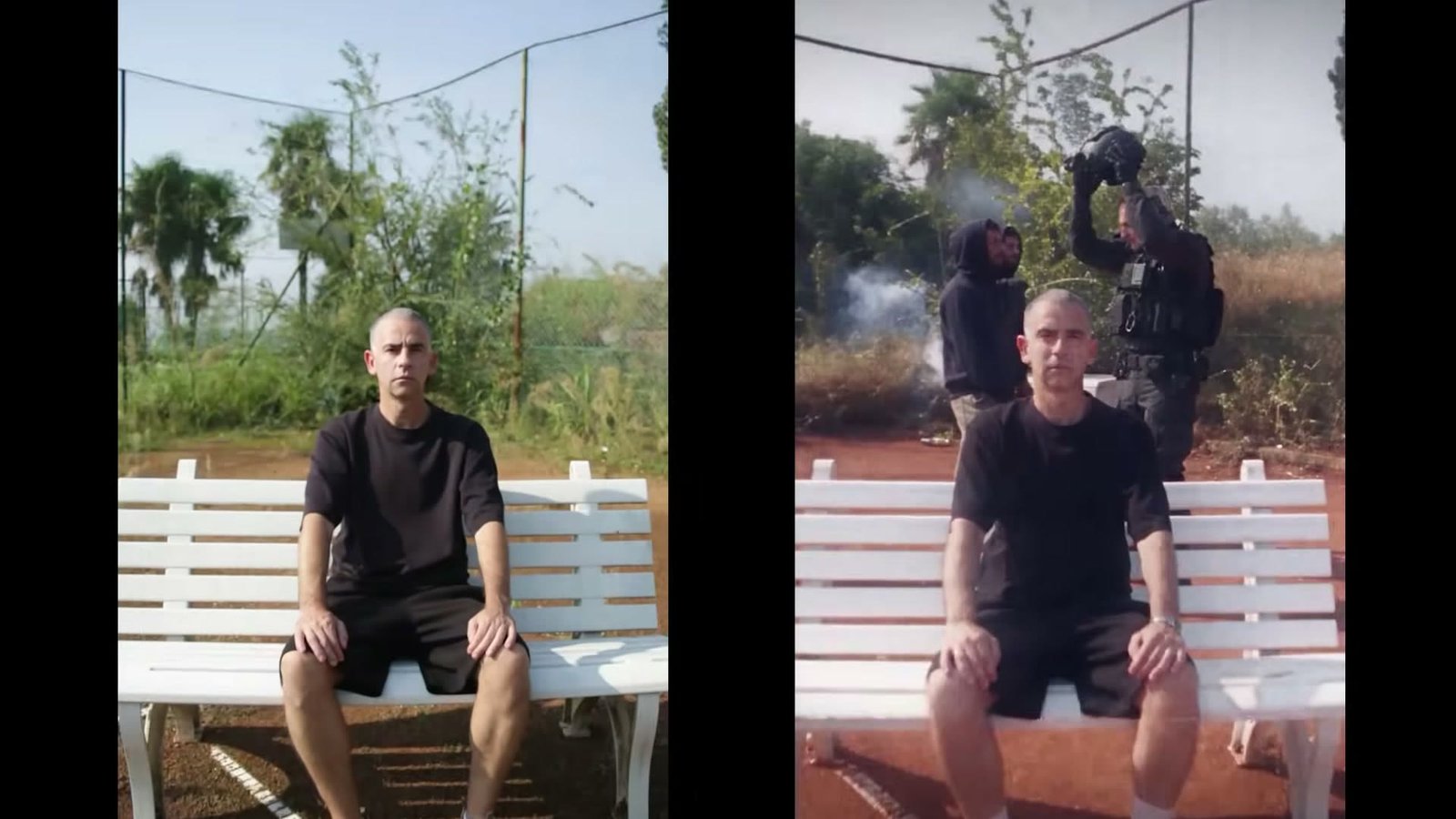
It always depends on the brief and the concept. Some videos are born entirely with artificial intelligence and work perfectly that way. But when I can start from real footage, I have a control over the scene that is hard to get any other way.
Control
With real footage I decide the light, the composition, the space. You can get the same control by building the scene in 3D, for example in Blender, and we use that route too. With a camera, though, the control is very precise, and what I see on the monitor is already the starting point of the final video.
Emotion
In realistic videos with human protagonists the difference is even clearer. The expressions are the ones the person really made while we were filming: a glance, a hesitation, a smile that comes a moment later. Footage carries those details with it, and the result conveys much more emotion.
AI as post-production
The simplest way to explain it is this. It is as if the person we filmed were wearing a green suit inside a professional green-screen studio, and artificial intelligence were the whole of post-production. Settings, costumes, objects, effects, lights: everything around the person that has to change, AI changes. The action, the framing and the performance stay as they were shot.
There is another advantage I love: quality. The final video keeps the quality of the camera we used, its grain, its colours. You can change them later in post or directly with AI, but the starting point has a different aesthetic and a different expressiveness.
Camera moves
If I need a particular move, I do not have to build it with complicated prompts or odd strategies. I do it with the camera. A handheld shot without a stabiliser, a reframe, a focus pull, a crash zoom: whatever technique I want, I shoot it, and then AI recreates it.
So why not shoot everything?
Because shooting everything means facing all the difficulties of a traditional set, and that is anything but simple. You need a set to build, actors, rented equipment, lights, a crew. Starting from real footage and handling the rest with AI, we avoid a good part of those costs and reach the result we would have wanted on a real set.
An example
The latest video we made for Andrea Ravo Mattoni's exhibition follows a young man walking through a post-apocalyptic landscape, inside a forest. There are ruined banks, abandoned vaults, money. Then a lake appears, and under the surface of the water a staircase emerges.
We shot it for real, in a location chosen carefully because it already had what we needed: the woods, the lake. As the reference actor I used myself. The banks, the money, the impossible scenes in the lake, and also the colours, the lights and the lighting, we generated with artificial intelligence.
More examples of hybrid production are on the Work page, such as the Milano Hockey Club pre-game video. Our method is on the AI video production page.